 LicenseManager
Starting an Electron app from scratch means wiring a lot before writing the first feature: a bundler for the main process, the preload script and the renderer, TypeScript, IPC between them, packaging, code signing, auto updates. A boilerplate gives you some or all of that on day one.
They range from minimal templates, that give you a window and hot reload, to fullstack kits with a database, updates and payments. Which one is best depends on how much you want decided for you, and on your UI framework. Below are the maintained ones, what each does well, and who it fits.
What to look at
- The Electron version. Electron supports its latest three major versions. A template on an older one ships a Chromium without security fixes, and upgrading several majors at once is real work.
- Recent activity. A starter you copy once doesn’t need daily commits, but it should keep up with Electron and its dependencies.
- The UI framework. Most starters are React. Vue, Angular and Next.js each have one or two good options.
- What you’d add anyway. Typed IPC, a database, auto updates, signed builds in CI, tests. Each is a day or more to set up and get right.
The versions and star counts below are from October 2026.
Electron AppStack
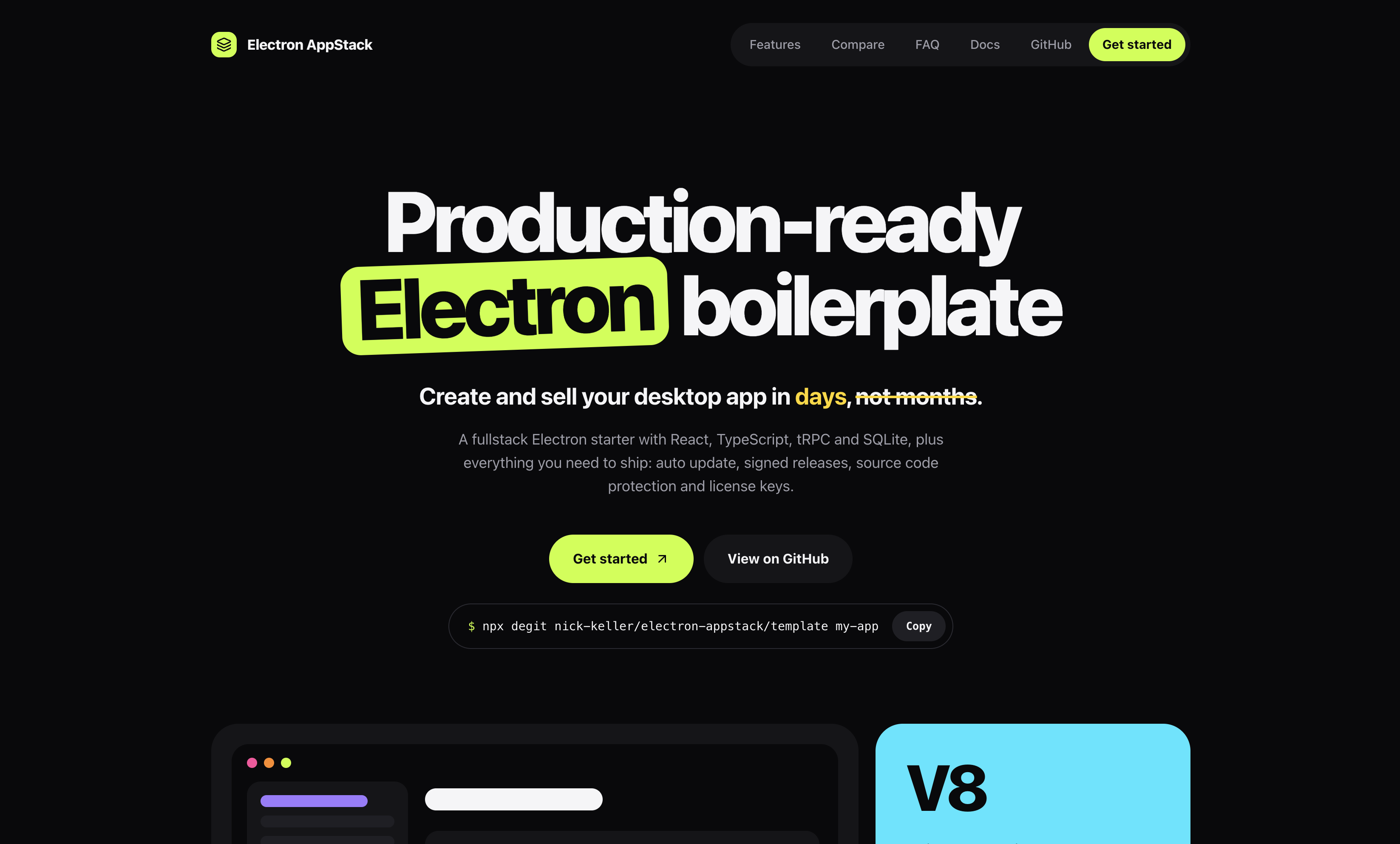
Electron AppStack is a fullstack starter for building a desktop app and selling it. It uses electron-vite with React 19, TanStack Router and Query, Tailwind CSS and shadcn/ui, with tRPC and Zod for typed IPC, a local SQLite database with Drizzle ORM and migrations, and electron-store for settings. It’s the one in this list that goes furthest on shipping: electron-builder installers for macOS, Windows and Linux, auto updates through GitHub Releases, a GitHub Actions workflow that signs and notarizes builds, source code protection with V8 bytecode, fuses and ASAR integrity, and license keys with Stripe payments through LicenseManager. It’s on Electron 45, and free to use for commercial apps. You copy the template once with degit, so it’s your code from then on. It’s also new, with very few GitHub stars, so you’ll find less written about it than about the older starters. It’s for people who want to sell a desktop app and would rather not spend the first weeks on infrastructure, and who are fine with React and its choices of libraries.
electron-shadcn
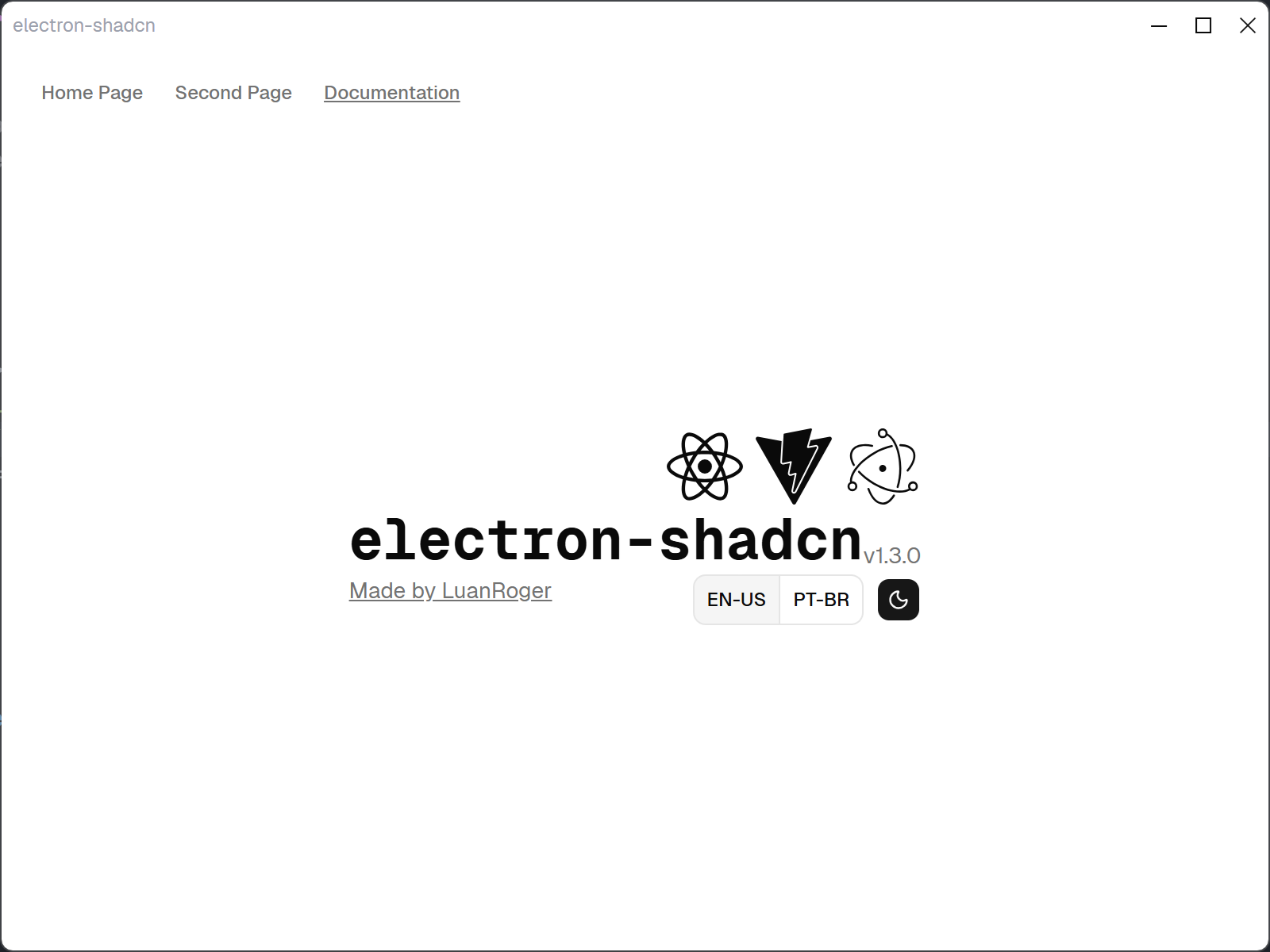
electron-shadcn combines Electron Forge and Vite with React, shadcn/ui, Tailwind CSS and TanStack Router, and uses oRPC for typed IPC. It’s a clean, modern base for the UI side of an app, on a recent Electron, and close to 800 stars. Packaging goes through Forge’s makers, and it leaves the database, updates and release workflow to you. It’s for React developers who like the shadcn/ui ecosystem and want an up to date, well structured start without much more.
Electron React Boilerplate
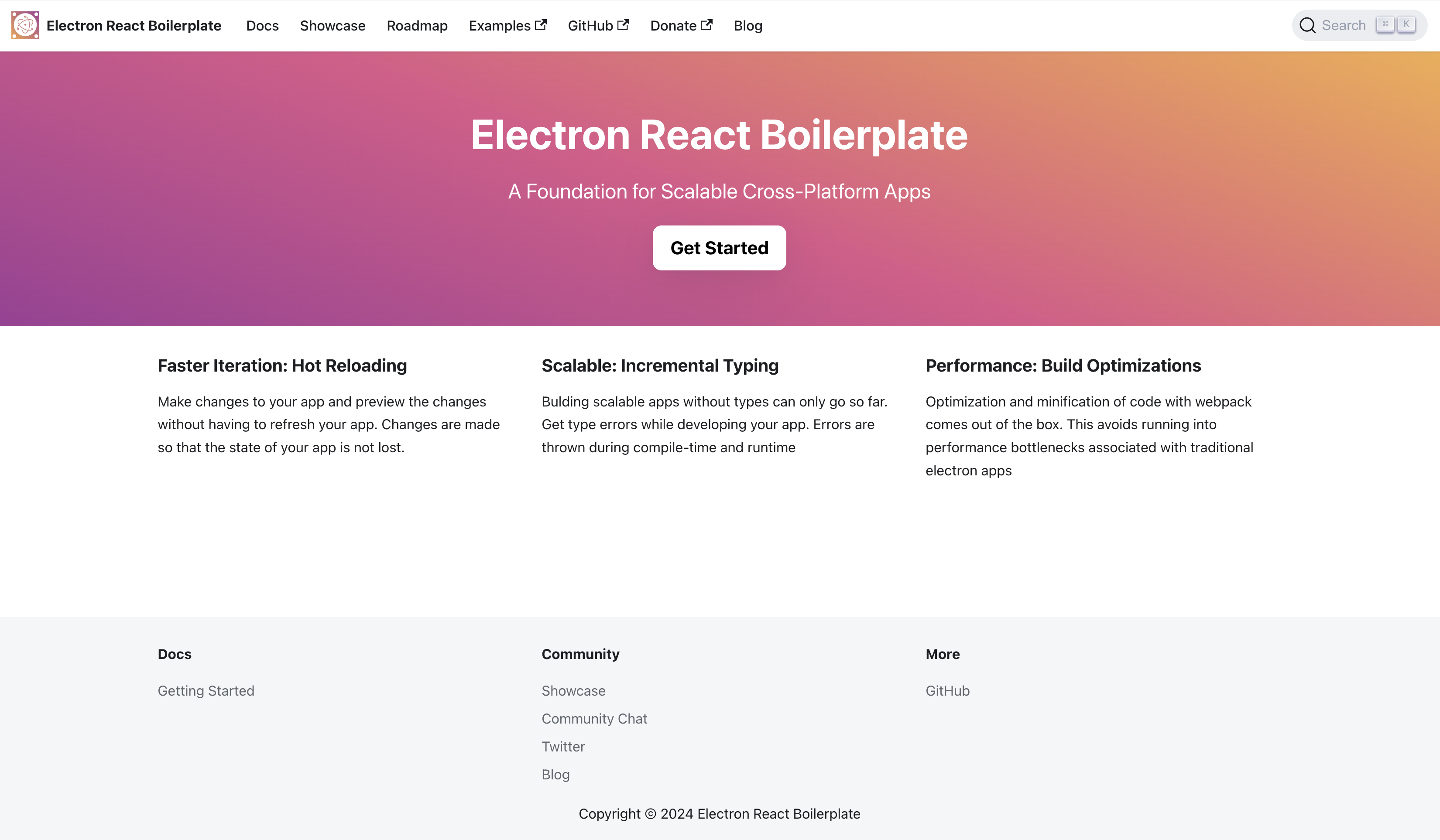
Electron React Boilerplate is the best known starter by far, with over 24,000 stars and many years of history. It comes with React, React Router, TypeScript, tests, auto updates with electron-updater, and a release workflow. That history is its main strength: most problems you’ll hit have an issue or an answer somewhere. It doesn’t include a UI library, typed IPC or a database. It’s for React developers who want a proven, widely used base and plan to pick the rest of their stack themselves.
Electron Forge (vite-typescript template)
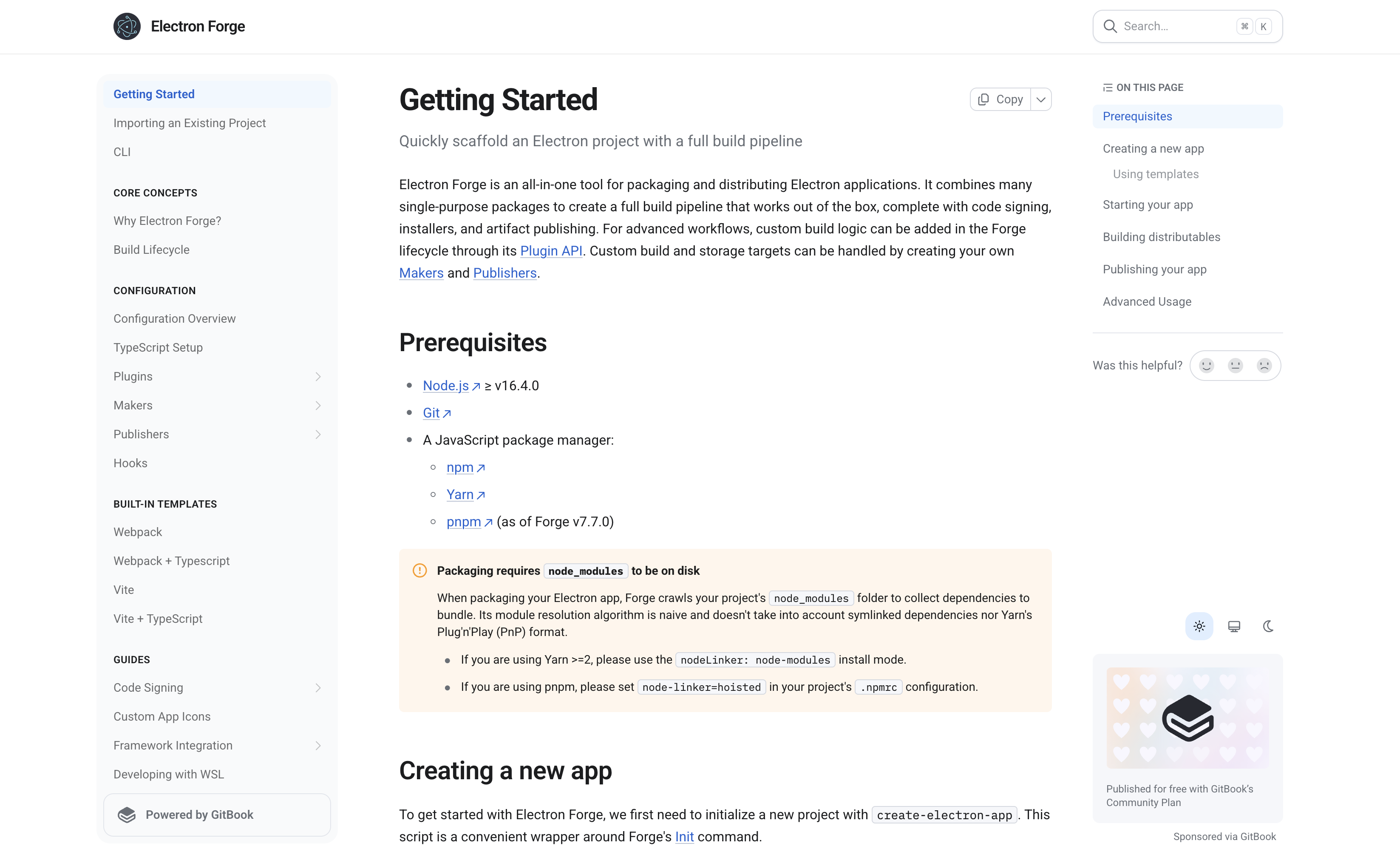
Electron Forge is the official toolchain, maintained by the Electron team, and npx create-electron-app@latest my-app --template=vite-typescript gives you its Vite and TypeScript template. It’s deliberately minimal: no UI framework, no router, no IPC layer. What it does well is packaging, with makers for every installer format and publishers for GitHub and S3, and it always follows the latest Electron. It’s for people who want the official path and to add every library themselves. See electron-builder vs Electron Forge if you’re unsure about the packaging side.
Electron React App
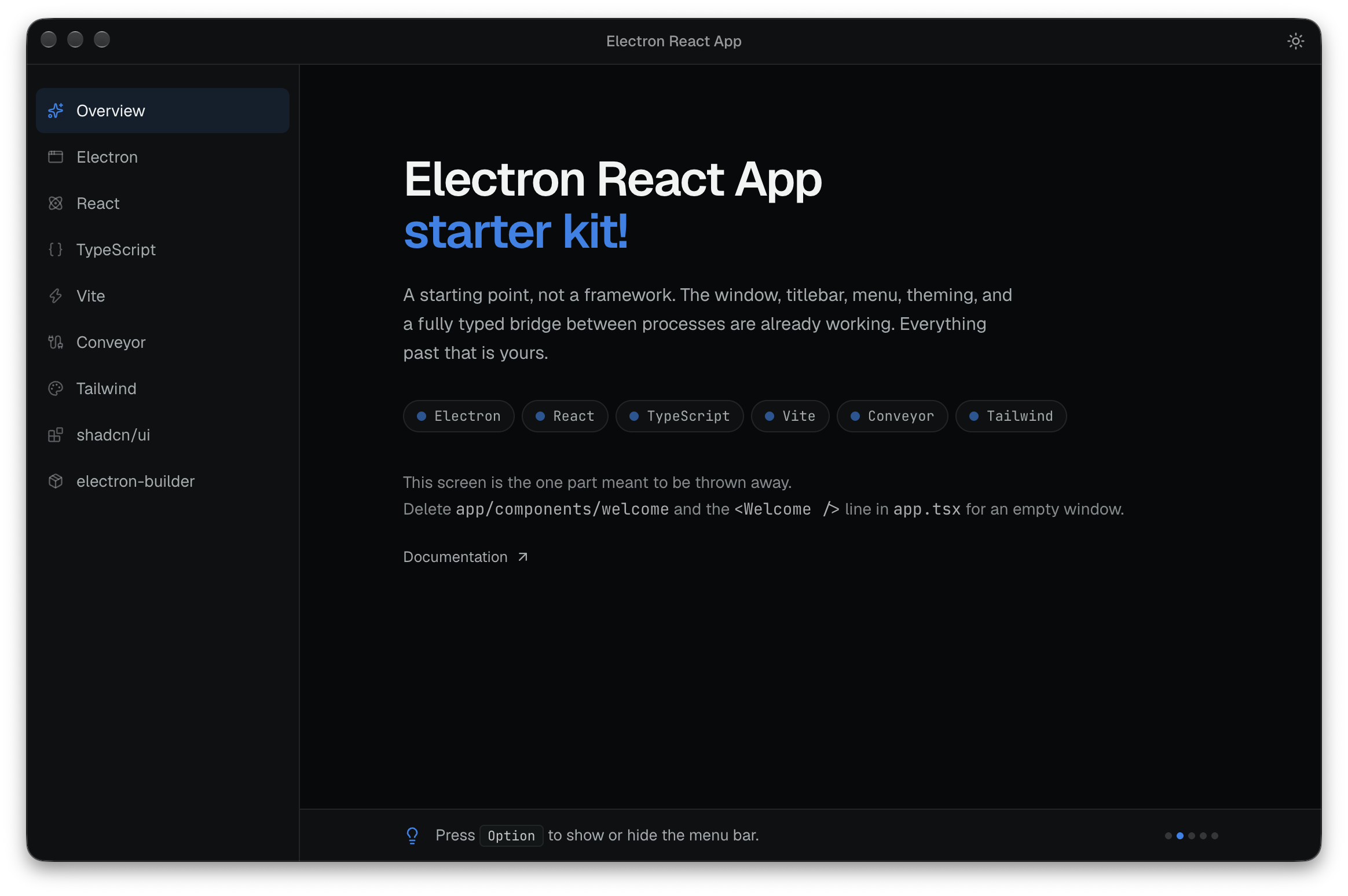
Electron React App is an electron-vite starter with React, Tailwind CSS, shadcn/ui, typed IPC and a custom title bar, on Electron 45. It’s lighter than the fullstack kits, and the frameless window with its own title bar is a nice touch if you want an app that doesn’t look like a web page in a window. It’s for React developers who want a polished-looking shell to build on, and will handle updates and releases later.
Angular Electron
Angular Electron is the reference starter for Angular, with around 5,700 stars. It uses the Angular CLI, and includes ngx-translate for translations, Vitest for unit tests, Playwright for end to end tests, and release workflows. Its last update is from September, on Electron 44. It’s for Angular teams: it’s the most maintained Angular option, and it saves you from making the Angular build and Electron work together yourself.
electron-vite templates
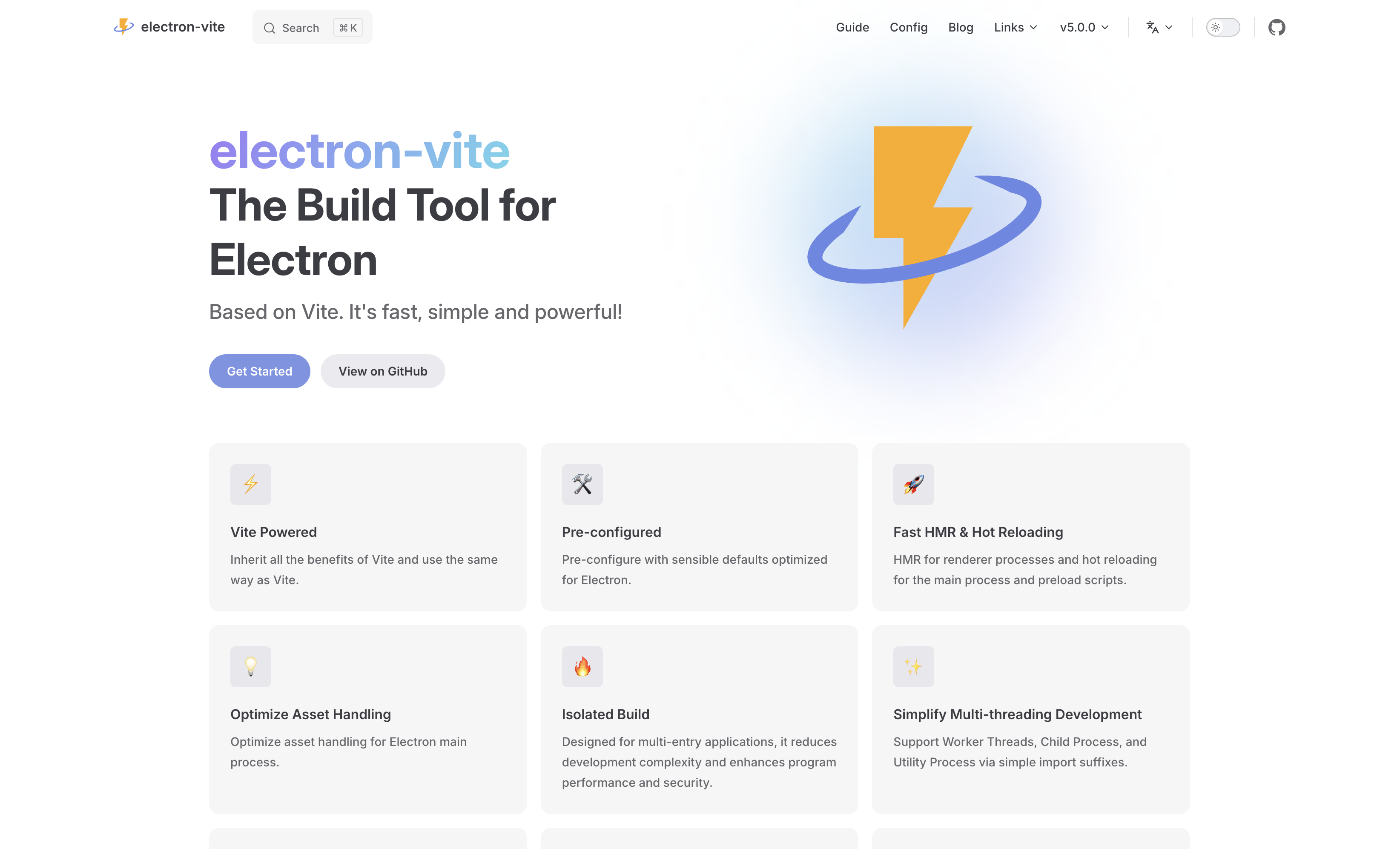
electron-vite is a build tool for Electron, used by several starters in this list, and create-electron scaffolds its official templates for React, Vue, Svelte, Solid or vanilla JavaScript. Each template is small: the three processes configured with Vite, TypeScript, hot reload, and electron-builder for packaging. It’s for people who want a minimal start with a framework other than React, or who want to understand every file of their project before adding to it.
Vutron
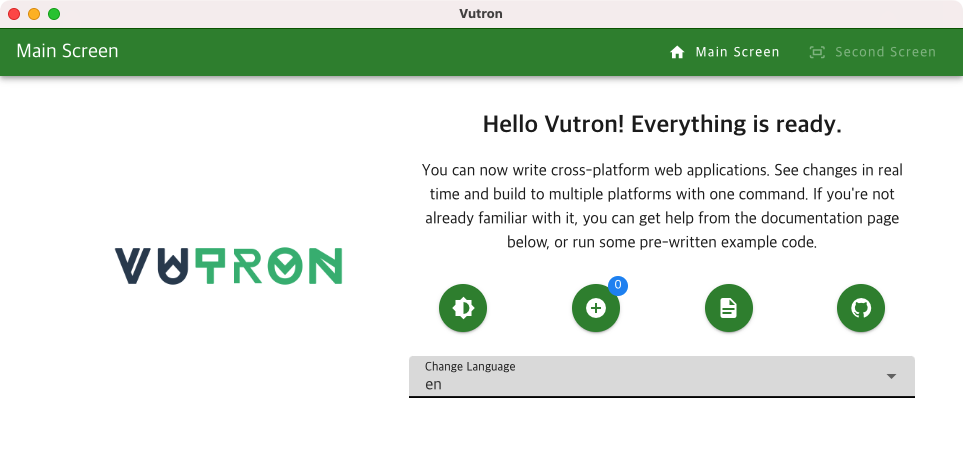
Vutron is a Vue 3 starter with Vuetify, Pinia, vue-router and vue-i18n, Playwright tests, and a documentation site. It’s the most complete option for Vue, while being less known than the bigger projects, with about 330 stars. It’s for Vue developers who want Vuetify’s components and a full structure from the start.
Nextron
Nextron runs a Next.js app inside Electron, with examples for Tailwind CSS, Material UI, Chakra UI and i18n, and about 4,400 stars. It lets you reuse Next.js knowledge and code, but you only get static export in the app, not server rendering, and it’s two majors behind on Electron 43. It’s for teams who already have a Next.js app, or know Next.js well, and want a desktop version without changing frameworks.
electron-vite-react and electron-vite-vue
electron-vite-react and electron-vite-vue come from the same organization, and use vite-plugin-electron rather than the electron-vite build tool, despite the name. The React one includes Tailwind CSS, an update screen and tests. The Vue one is minimal, with TypeScript and hot reload only. Both are on Electron 42, the oldest still supported version, and were last updated in September. They’re popular, with 2,400 and 4,900 stars, and are for people who want a small Vite based start and are ready to upgrade Electron soon after.
Popular starters that fell behind
Several boilerplates you’ll find in older articles and search results are no longer a good start:
- Vite Electron Builder and the paid Desktop App Boilerplate are on Electron 41, out of support.
- Secure Electron Template is on Electron 19, more than 25 major versions behind, despite its focus on security.
- electron-app by daltonmenezes (Electron 39), Reactronite (Electron 38) and Electron Vite React Boilerplate by kethakav (Electron 35) are several majors behind.
- electron-boilerplate by sindresorhus and by szwacz are archived, on Electron 13.
Their code can still be worth reading, but upgrading them is a project in itself.
How to choose
- You want to sell your app and start with updates, signing, a database and licensing in place: Electron AppStack.
- You use React and want a modern UI base: electron-shadcn or Electron React App. For the most proven one: Electron React Boilerplate.
- You want the official, minimal path: the Electron Forge template.
- You use Angular: Angular Electron. Vue: Vutron, or the electron-vite template for a minimal one. Next.js: Nextron.
- You use Svelte or Solid: the electron-vite templates.
Whatever you pick, a boilerplate saves you the first days, not the last ones. If yours doesn’t include licensing, see how to add license keys to an Electron app and how to sell an Electron app.